


- (01)
SaaS App Development
We engineer scalable, multi-tenant architectures designed for rapid market expansion.
- (02)
Website Development
We craft modern, responsive websites focused on performance, security, and user-friendly experiences.
- (03)
Mobile App Development
We craft high-fidelity iOS and Android experiences that drive retention and user engagement.
- (04)
E-commerce Website Development
We build conversion-optimized digital storefronts built to manage global scale.
- (05)
Creative Designing
We create data-informed UI/UX systems that elevate brand identity and user flow.
- (06)
Digital Marketing
We Execute high-ROI digital strategies that turn visibility into measurable revenue.













Our Work
Our work reflects our expertise in delivering innovative, scalable, and user-focused digital solutions. From custom software to modern web and mobile applications, we help businesses transform ideas into impactful products that drive growth, enhance user experience, and create long-term value in competitive markets.

Careers
Empower your professional journey at Tec-Sense. We are a collective of thinkers, creators, and problem-solvers dedicated to pushing technical boundaries. If you’re passionate about innovation and eager to shape the future of software development, explore our open roles and build your legacy with us today.

Why Laravel is Still the Best Framework for Scalable Web Applications
Why Laravel is Still the Best Framework for Scalable Web Applications
In today’s fast-paced digital landscape, businesses are no longer building simple websites—they are creating complex, high-performance systems that must scale as they grow. Whether it’s a SaaS platform, enterprise dashboard or high-traffic application, scalability is no longer optional.
This is where Laravel development for scalable web applications stands out. Laravel provides a strong foundation for building secure, flexible and performance-driven platforms that evolve with business needs. Despite the rise of newer technologies, Laravel continues to be a preferred choice for developers and organisations aiming for long-term growth.
What Makes a Web Application Scalable?
Before understanding why Laravel excels, it’s important to define what scalability actually means in web development.
A scalable web application is one that can handle increasing users, data and traffic without compromising performance or user experience. Scalability can be broadly divided into two types:
- Vertical scalability – Increasing server resources like CPU or memory
- Horizontal scalability – Adding more servers to distribute the load
Key factors that contribute to scalability include:
- Efficient database management
- Optimised performance and caching
- Modular architecture
- Load balancing capabilities
- Background job processing
For startups, scalability ensures smooth growth. For enterprises, it guarantees stability under heavy demand. A framework that supports these factors makes all the difference—and Laravel delivers on all fronts.
Overview of Laravel Framework
Laravel is a popular open-source PHP framework designed to make web application development faster, cleaner and more efficient. Introduced in 2011, Laravel quickly gained traction due to its elegant syntax and developer-friendly features.
Over the years, Laravel has evolved into a full-fledged ecosystem, offering tools for routing, authentication, caching, database management and more. It is widely used for building:
- SaaS platforms
- Enterprise applications
- RESTful APIs
- eCommerce systems
Its flexibility and strong community support make it a dependable choice for businesses aiming to build scalable and future-ready applications.
Key Reasons Why Laravel is Best for Scalable Applications
1. MVC Architecture for Clean Code
Laravel follows the Model-View-Controller (MVC) architecture, which separates business logic, user interface and data handling. This structured approach makes applications easier to manage, update and scale over time.
With clean code organisation, developers can work more efficiently, reduce errors and introduce new features without disrupting existing functionality.
2. Built-in Security Features
Security plays a crucial role in scalability. As applications grow, they become more vulnerable to threats.
Laravel provides built-in security features such as:
- Protection against SQL injection
- Cross-site scripting (XSS) prevention
- Cross-site request forgery (CSRF) protection
- Secure authentication systems
These features ensure that applications remain secure even as user data and traffic increase.
3. Powerful ORM (Eloquent)
Laravel’s Eloquent ORM simplifies database interactions by allowing developers to work with data using an object-oriented approach.
It supports complex relationships, query optimisation and efficient data handling, which are essential for applications dealing with large datasets. This improves both performance and scalability.
4. Caching and Performance Optimisation
Laravel supports multiple caching systems such as Redis and Memcached, which significantly improve application speed.
By storing frequently accessed data, caching reduces server load and response time. This is especially important for high-traffic applications where performance directly impacts user experience.
5. Queue Management for Background Tasks
Scalable applications often require handling tasks like sending emails, processing payments or generating reports without slowing down the system.
Laravel’s queue system allows these tasks to run in the background, ensuring smooth performance and better user experience even during heavy operations.
6. API Development Capabilities
Modern web applications rely heavily on APIs for integration with mobile apps, third-party tools and external systems.
Laravel makes it easy to build secure and scalable RESTful APIs. Its routing system, authentication features and structured responses enable seamless communication across platforms.
7. Modular and Package-Based System
Laravel’s modular structure allows developers to break applications into smaller, reusable components.
This makes it easier to scale specific parts of the application without affecting the entire system. Additionally, Laravel’s extensive package ecosystem speeds up development and reduces redundancy.
Laravel for SaaS and Enterprise Applications
Laravel is particularly well-suited for SaaS and enterprise-level applications due to its flexibility and scalability features.
For SaaS platforms, Laravel supports:
- Multi-tenancy architecture
- Subscription-based billing systems
- API integrations
- Scalable backend infrastructure
For enterprises, it enables the development of:
- CRM and ERP systems
- Workflow automation tools
- Data-driven dashboards
Its ability to handle complex logic and large-scale operations makes it a reliable framework for businesses of all sizes.
Laravel vs Other Frameworks
When compared to other frameworks, Laravel holds a strong position.
Laravel vs Node.js: Node.js excels in real-time applications, but Laravel offers a more structured development approach and built-in features, reducing development time.
Laravel vs Django: Django is powerful but more rigid. Laravel provides greater flexibility and a more developer-friendly experience.
Laravel vs other PHP frameworks: Laravel stands out with its modern syntax, strong ecosystem and extensive community support.
In many cases, Laravel becomes the preferred choice due to its balance of performance, scalability and ease of development.
Benefits of Using Laravel for Business Growth
Laravel not only supports technical scalability but also contributes to business growth.
Faster time-to-market: Pre-built tools, reusable components and a rich ecosystem accelerate development cycles, enabling faster product launches and helping businesses validate ideas and capture market opportunities quickly.
Cost-effective development: Efficient development processes, reusable packages and reduced coding complexity lower overall project costs while maintaining quality, making Laravel a budget-friendly choice for scalable application development.
Strong community support: A large global developer community ensures continuous updates, extensive documentation and readily available solutions, helping businesses maintain stability and adopt new features with confidence.
Easy maintenance: Clean architecture and organised code structure simplify debugging, updates and feature enhancements, allowing applications to remain stable, adaptable and easy to manage over time.
Long-term scalability: Flexible architecture, modular development and performance optimisation features allow applications to scale seamlessly, supporting growing users, data and functionality without compromising system reliability.
These benefits make Laravel an ideal choice for businesses looking to scale efficiently.
Common Misconceptions About Laravel
Despite its capabilities, Laravel is often misunderstood.
- “Laravel is only for small projects”
In reality, Laravel powers large-scale enterprise and SaaS applications worldwide. - “PHP is outdated”
Modern PHP, combined with Laravel, is highly efficient, secure and widely used.
Laravel continues to evolve, proving that it is far from outdated.
Future of Laravel in Web Development
Laravel’s future looks strong due to continuous innovation and ecosystem growth.
With support for modern technologies such as cloud computing, microservices and AI integrations, Laravel remains a future-ready framework.
Regular updates and an active community ensure that Laravel adapts to changing industry demands, making it a long-term investment for businesses.
Conclusion
Choosing the right framework is crucial for building scalable web applications, and Laravel continues to prove why it remains a top choice.
Its clean architecture, built-in features, strong security and scalability tools make it ideal for modern digital solutions. From startups to enterprises, Laravel provides the flexibility and performance needed to grow without limitations.
For businesses looking to build secure, scalable and high-performing applications, Laravel is not just a good option—it is a strategic choice.
FAQs
Is Laravel suitable for large-scale applications?
Yes, Laravel is widely used for enterprise and SaaS applications due to its scalable architecture and performance optimisation features.
Why is Laravel preferred for web development?
Laravel offers clean code structure, built-in tools, strong security and faster development, making it highly efficient for modern applications.
Can Laravel handle high traffic?
With caching, queue management and scalable infrastructure, Laravel can efficiently handle high traffic applications.
Is Laravel good for SaaS platforms?
Yes, Laravel supports multi-tenancy, API integration and scalable backend systems, making it ideal for SaaS development.
What makes Laravel scalable?
Features like MVC architecture, caching, queues, ORM and modular design make Laravel highly scalable.
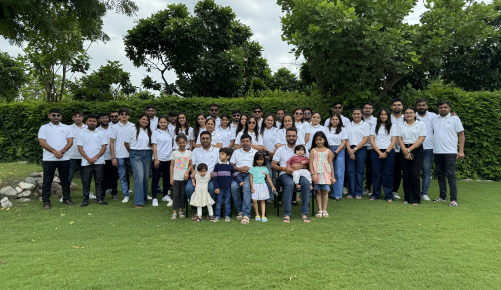

About Tec-sense
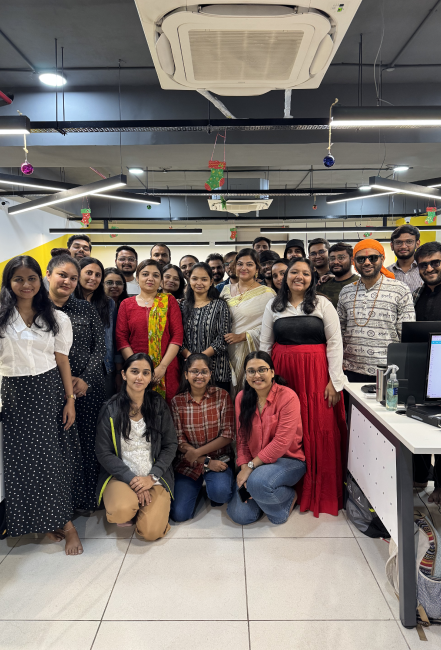
Our team brings together designers, developers, strategists, and marketing experts under one roof, making collaboration seamless and execution faster.
Learn MoreAuthor
 tec-sense

Industry Recognition
Clutch

Featured as a trusted service provider with verified client reviews and strong project outcomes.
2014
Upwork

A trusted development partner with a proven track record and long-term collaborations.
2014
Behance

Home to our best creative and UI/UX design work — curated and showcased globally.
2012

Five-star rated for the way we treat our partners.
2014