


- (01)
SaaS App Development
We engineer scalable, multi-tenant architectures designed for rapid market expansion.
- (02)
Custom CRM Development
Future-ready CRM solutions designed around your workflows, teams, and customer experience.
- (03)
Website Development
We craft modern, responsive websites focused on performance, security, and user-friendly experiences.
- (04)
Mobile App Development
We craft high-fidelity iOS and Android experiences that drive retention and user engagement.
- (05)
E-commerce Website Development
We build conversion-optimized digital storefronts built to manage global scale.
- (06)
Creative Designing
We create data-informed UI/UX systems that elevate brand identity and user flow.
- (07)
Digital Marketing
We Execute high-ROI digital strategies that turn visibility into measurable revenue.














Our Work
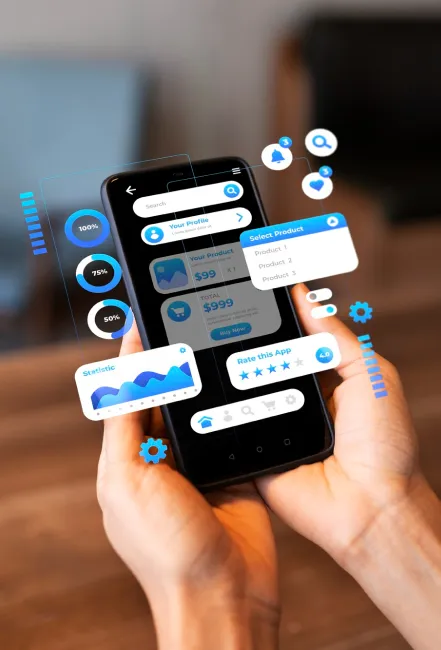
Our work reflects our expertise in delivering innovative, scalable, and user-focused digital solutions. From custom software to modern web and mobile applications, we help businesses transform ideas into impactful products that drive growth, enhance user experience, and create long-term value in competitive markets.
Careers
Empower your professional journey at Tec-Sense. We are a collective of thinkers, creators, and problem-solvers dedicated to pushing technical boundaries. If you’re passionate about innovation and eager to shape the future of software development, explore our open roles and build your legacy with us today.


In-House vs SaaS Product Development Company: What’s Better for Startups?
You’ve got a promising idea. Maybe you’ve validated it with early users, or perhaps you’re still sketching out your MVP on a whiteboard. Either way, one decision will shape how fast—and how successfully—you bring your product to market:
Do you build an internal team, or partner with a SaaS product development company?
For founders, this isn’t just a technical choice. It directly affects your budget, timeline, scalability, and even your chances of survival in a competitive market. Let’s walk through both approaches in a practical, founder-first way so you can make the right call for your startup.
What is In-House SaaS Development?
In-house development means building your own internal team—developers, designers, testers, and possibly a product manager—all working exclusively on your product.
At first glance, it sounds ideal. You have complete control. Communication is direct. The team is fully aligned with your vision.
But the reality is more complex.
Hiring the right people takes time. Salaries, onboarding, infrastructure, and retention quickly add up. And for early-stage startups, this can slow down your momentum before you even launch.
Still, for some companies—especially well-funded ones—this model offers long-term ownership and deeper product understanding.
What is a SaaS Product Development Company?
A SaaS product development company is an external partner that specialises in building SaaS applications from the ground up. Instead of assembling a team from scratch, you gain access to an experienced group of developers, designers, and strategists who have already built similar products.
Think of it as plugging into a ready-made engine.
These companies typically offer:
- End-to-end development (from idea to deployment)
- Proven development frameworks
- Scalable teams based on your needs
For startups, this approach often translates into faster execution, reduced risk, and a clearer path to launching an MVP.
In-House vs SaaS Development: A Practical Comparison
Let’s break this down in terms that actually matter to founders.
Cost: Upfront vs Flexible Investment
Building in-house is expensive. You’re paying salaries, recruitment fees, tools, office space (if applicable), and benefits. Even before writing a single line of code, you’ve already made a significant financial commitment.
In contrast, working with a SaaS product development company gives you a more flexible model. You pay for what you need—whether it’s an MVP or ongoing development. This makes it easier to manage cash flow, especially in the early stages.
When founders start comparing SaaS product development cost, this is often where outsourcing becomes attractive.
Speed: Months vs Momentum
Speed is everything for startups.
Hiring internally can take months. Even after hiring, your team needs time to align, understand the product, and start delivering.
A SaaS partner, on the other hand, is ready from day one. They already have processes, tools, and experience in place. This means you can move from idea to MVP much faster—sometimes in a matter of weeks instead of months.
Expertise: Limited vs Diverse Skillsets
An in-house team is only as strong as the individuals you hire. If you miss a key skill—say DevOps or UI/UX—it can slow everything down.
With external SaaS development services, you gain access to a wider pool of expertise:
- Backend architecture
- Cloud infrastructure
- User experience design
- Security best practices
This depth of knowledge can be difficult (and expensive) to build internally at an early stage.
Scalability: Fixed vs Flexible
Startups rarely move in a straight line. Some months you need to scale fast; others, you need to control costs.
In-house teams are harder to scale. Hiring takes time, and layoffs are never ideal.
A SaaS development company gives you flexibility. You can scale resources up or down based on your needs—without long-term commitments.
Control: Direct vs Structured
This is where in-house teams shine. You have full control over decisions, priorities, and communication.
With an external partner, control is still there—but it requires structure. Clear communication, regular updates, and defined processes are essential.
The good news? A reliable partner will already have these systems in place.
Challenges of In-House Development
While building your own team offers control, it comes with significant challenges:
- High hiring costs and long recruitment cycles
- Difficulty finding skilled SaaS developers
- Employee retention issues
- Slower time-to-market
- Increased management overhead
Many founders underestimate how much time and energy goes into building and managing a team—time that could be spent on growth, fundraising, or product strategy.
Challenges of Hiring a SaaS Development Company
Outsourcing isn’t without its risks either.
- Choosing the wrong partner can lead to delays or poor quality
- Communication gaps can slow progress
- Some companies lack transparency or consistency
However, these risks can be minimised by carefully selecting the right partner—one with proven experience, clear processes, and strong communication practices.
When Should Startups Choose In-House?
An in-house approach works best when:
- You have sufficient funding
- Your product requires deep, ongoing innovation
- You want full control over every aspect of development
- You’re building a long-term internal tech capability
In short, it’s a better fit for startups that are already stable and looking to scale internally.
When Should Startups Choose a SaaS Product Development Company?
For most early-stage startups, this is the more practical choice.
You should consider a SaaS partner if:
- You need to launch quickly
- You’re building an MVP
- You want to validate your idea before heavy investment
- You’re working with a limited budget
This is why many founders choose to hire SaaS developers through external partners instead of building a team from scratch.
The Hybrid Approach: Best of Both Worlds
Interestingly, many successful startups don’t choose just one path.
They start with a SaaS product development company to build and launch their MVP. Once the product gains traction, they gradually build an in-house team to take over and scale.
This hybrid model offers:
- Faster initial launch
- Lower early-stage risk
- Long-term control
It’s a balanced approach that aligns well with how startups actually grow.
Final Thoughts
There’s no universal answer to the in-house vs SaaS development debate.
It depends on your:
- Budget
- Timeline
- Product complexity
- Long-term vision
That said, for most startups—especially in the early stages—partnering with a SaaS product development company is often the fastest and most cost-effective way to bring an idea to life.
It allows you to focus on what truly matters: validating your product, understanding your users, and building a business that scales.
Ready to Build Your SaaS Product?
If you’re looking to turn your idea into a scalable product without unnecessary delays, partnering with the right team makes all the difference. At Tec-Sense, we help startups move faster with strategic, end-to-end SaaS development.
Whether you need complete SaaS development services or want to validate your MVP with confidence, our expert team is here to guide you at every stage.
Build smarter, launch faster, and scale with confidence — with Tec-Sense.

About Tec-sense
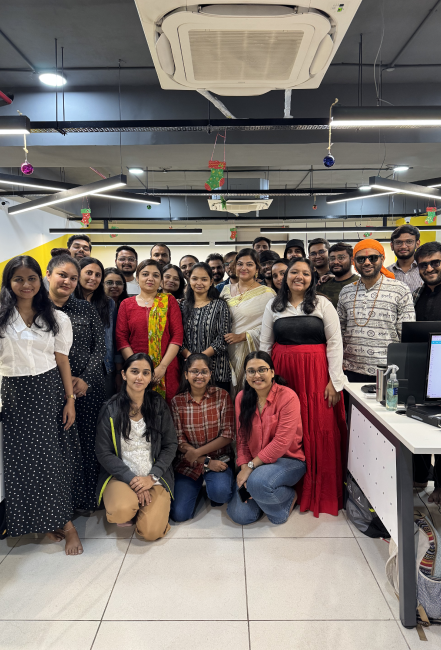
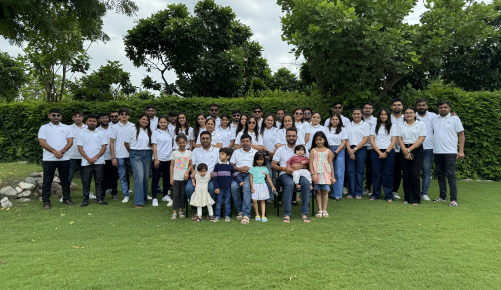
Our team brings together designers, developers, strategists, and marketing experts under one roof, making collaboration seamless and execution faster.
Learn MoreAuthor
 tec-sense
Recent Posts
- 11-08-2026
- CRM Development
How Much Does Custom CRM Development Cost in 2026? A Complete Pricing Guide
- 05-08-2026
- CRM Development
Choosing a CRM Development Company? 20 Things to Check Before Signing a Contract
- 17-07-2026
- SaaS Development
Before You Build a SaaS Product: 10 Questions Every Founder Should Answer
Industry Recognition
Clutch

Featured as a trusted service provider with verified client reviews and strong project outcomes.
2014
Upwork

A trusted development partner with a proven track record and long-term collaborations.
2015
Behance

Home to our best creative and UI/UX design work — curated and showcased globally.
2020
Dribbble

Showcasing our best UI/UX and creative design work - crafted for engaging digital experiences.
2023

Five-star rated for the way we treat our partners.
2014