

- (01)
SaaS App Development
We engineer scalable, multi-tenant architectures designed for rapid market expansion.
- (02)
Custom CRM Development
Future-ready CRM solutions designed around your workflows, teams, and customer experience.
- (03)
Website Development
We craft modern, responsive websites focused on performance, security, and user-friendly experiences.
- (04)
Mobile App Development
We craft high-fidelity iOS and Android experiences that drive retention and user engagement.
- (05)
E-commerce Website Development
We build conversion-optimized digital storefronts built to manage global scale.
- (06)
Creative Designing
We create data-informed UI/UX systems that elevate brand identity and user flow.
- (07)
Digital Marketing
We Execute high-ROI digital strategies that turn visibility into measurable revenue.














Our Work
Our work reflects our expertise in delivering innovative, scalable, and user-focused digital solutions. From custom software to modern web and mobile applications, we help businesses transform ideas into impactful products that drive growth, enhance user experience, and create long-term value in competitive markets.
Careers
Empower your professional journey at Tec-Sense. We are a collective of thinkers, creators, and problem-solvers dedicated to pushing technical boundaries. If you’re passionate about innovation and eager to shape the future of software development, explore our open roles and build your legacy with us today.


How Much Does Custom CRM Development Cost in 2026? A Complete Pricing Guide

Your sales team is entering the same customer data into three different tools. Your support team can’t see what marketing already promised a client. Your leadership team is making decisions on numbers that don’t quite match across departments.
This is usually the point where businesses start asking about custom CRM development cost. Off-the-shelf platforms solve some of these problems, but they also force you to work around limitations that were never designed for your business. A custom-built system removes those constraints, but the investment needs to be planned properly.
This guide breaks down what actually drives CRM software development cost in 2026, so you can budget with confidence instead of guessing.
What Does Custom CRM Development Cost in 2026?
A custom CRM development cost typically ranges from £15,000 to £150,000 or more, depending on complexity, features and integrations. A simple CRM with core sales and contact management can sit at the lower end. An enterprise-grade system with AI features, custom workflows and multiple integrations moves toward the higher end.
There’s no single fixed price because no two businesses run identical processes. The figure below gives you a starting reference, and the sections that follow explain what pushes that number up or down.
Why the “Off-the-Shelf vs Custom” Decision Affects Your Budget
Before looking at custom CRM development pricing, it helps to understand why businesses move away from ready-made platforms in the first place.
Off-the-shelf tools are quick to set up and cheaper initially. But as your business grows, you often end up paying for features you don’t use, while missing the ones you actually need. Customisation on these platforms has limits, and licensing costs increase as your team scales.
| Factor | Off-the-Shelf CRM | Custom CRM |
| Initial cost | Lower | Higher |
| Long-term cost | Increases with users and add-ons | Fixed development, no per-user licensing |
| Customisation | Limited | Built around your exact workflow |
| Scalability | Restricted by vendor’s roadmap | Built to grow with your business |
| Data ownership | Shared with vendor | Fully owned by you |
| Integration flexibility | Depends on vendor’s ecosystem | Unlimited, built to your requirements |
If your sales process, customer lifecycle or reporting needs are fairly standard, an off-the-shelf tool may serve you well. If your business runs on processes that don’t fit a generic mould, a custom build usually pays for itself over time.
Custom CRM Development Cost Breakdown
Understanding the custom CRM development cost breakdown helps you see exactly where your budget goes, rather than treating it as one large, unclear figure.
- Discovery and Planning
Before any development starts, your requirements need to be mapped against your actual business processes. This stage typically includes workflow analysis, feature scoping and technical architecture planning.
Typical cost range: £1,500 – £5,000
Skipping this stage is one of the most common reasons CRM projects go over budget later. A properly scoped project prevents costly changes mid-development.
- UI/UX Design
Your CRM will be used daily by sales, support and operations teams. If it’s difficult to navigate, adoption suffers regardless of how powerful the backend is.
Typical cost range: £2,000 – £10,000
This covers wireframes, user flows and interface design tailored to how your team actually works, not a generic dashboard template.
- Core CRM Development
This is the largest portion of your budget and includes contact management, lead tracking, pipeline management, task automation and reporting dashboards.
Typical cost range: £8,000 – £60,000
Cost here depends heavily on how many modules you need and how deep the customisation goes within each one.
- Third-Party Integrations
Most businesses need their CRM connected to email platforms, accounting software, marketing tools or existing ERP systems.
Typical cost range: £2,000 – £20,000
Each integration adds development and testing time, particularly when connecting to legacy systems that weren’t built with modern APIs in mind.
- AI and Automation Features
Predictive lead scoring, automated follow-ups, AI-generated insights and chatbot support are increasingly common requests in 2026.
Typical cost range: £5,000 – £30,000
These features add real value for teams handling high lead volumes, but they’re not essential for every business, so scope them based on actual need.
- Testing and Quality Assurance
Your CRM handles sensitive customer data, so thorough testing across devices, user roles and integrations is non-negotiable.
Typical cost range: £1,500 – £8,000
- Deployment and Post-Launch Support
Launch isn’t the finish line. Ongoing support, bug fixes and minor enhancements keep your CRM running smoothly as your team starts using it at scale.
Typical cost range: £1,000 – £5,000 (initial), followed by ongoing maintenance
How Much Does It Cost to Build a CRM System? Key Factors That Change the Price
If you’re asking how much it costs to build a CRM system for your specific business, these are the variables that move the number most:
Number of user roles. A CRM with three permission levels costs less to build than one with ten role-based access tiers.
Complexity of workflows. Simple lead-to-close pipelines are straightforward. Multi-stage approval chains and conditional automation take longer to develop and test.
Integration count. Every additional system you connect to (email, ERP, accounting, marketing automation) adds development, testing and maintenance time.
Data migration. Moving years of customer data from an old system into a new custom CRM requires careful mapping and validation, which affects timeline and cost.
Mobile app requirement. A CRM with a dedicated mobile app costs more than a responsive web platform alone.
Team location and expertise. Development rates vary significantly between regions and between agencies versus freelancers.
In-House Team vs Dedicated Development Team
Many businesses weigh up hiring in-house against working with a dedicated development team before committing to a custom build.
| Factor | In-House Team | Dedicated Development Team |
| Hiring time | Weeks to months | Immediate access to skilled developers |
| Cost | Salaries, benefits, infrastructure | Project-based or fixed monthly cost |
| Expertise | Limited to hired skill set | Access to specialists across technologies |
| Scalability | Difficult to scale quickly | Easy to scale up or down |
| Risk | Higher, tied to individual employees | Shared across an experienced team |
For most SMEs and SaaS businesses, a dedicated development team offers the specialist expertise of an in-house hire without the long-term overhead.
How to Reduce Your Custom CRM Development Pricing Without Cutting Corners
You don’t need every feature in version one. A phased approach keeps your custom CRM development pricing manageable while still delivering a system that works.
- Start with core modules. Launch with contact management, pipeline tracking and basic reporting, then add advanced features later.
- Prioritise integrations by actual usage. Connect the tools your team uses daily first, and add secondary integrations in a later phase.
- Choose scalable architecture from day one. This avoids expensive rebuilds when you’re ready to add AI features or new modules.
- Work with a team that understands your industry. Fewer revisions mean a lower final cost.
- Define success metrics upfront. Clear requirements reduce scope creep, which is one of the biggest hidden cost drivers in software projects.
Why Businesses Choose Tec-Sense for Custom CRM Development
With over 12 years of experience and 500+ successful projects across 20+ industries, our team has built CRM systems for businesses across the UK, USA, Canada, Australia and Europe. We approach every CRM build the same way: understand your workflow first, then design software around it, not the other way round.
Our developers work with React.js, Node.js, Laravel and Python to build CRMs that scale with your business, integrate with your existing tools and give your team software they actually want to use.
Frequently Asked Questions
What is the average cost of custom CRM development?
Custom CRM development cost typically ranges from £15,000 to £150,000, depending on features, integrations and complexity. Simple systems sit at the lower end, while enterprise builds with AI and multiple integrations cost more.
How long does it take to build a custom CRM?
A basic custom CRM can take 8 to 12 weeks to build. More complex systems with multiple integrations and AI features typically take 4 to 9 months, depending on scope.
Is a custom CRM worth it for a small business?
It depends on your workflow complexity. If your processes are standard, an off-the-shelf tool may suffice. If you’re working around a platform’s limitations regularly, a custom build often costs less over time than continued licensing and workarounds.
Can I add AI features to my CRM later?
Yes. If your CRM is built on scalable architecture, AI features like predictive scoring or automated insights can be added in a later development phase without rebuilding the core system.
Do I own the CRM once it’s built?
With a custom build, you own the complete system, including the source code and all customer data, unlike off-the-shelf platforms where data and access remain tied to the vendor.
Plan Your CRM Investment With a Clear Roadmap
Custom CRM development cost varies based on your specific workflows, integrations and growth plans, but it doesn’t need to be a guessing game. A clear scope, phased approach and the right development partner keep your investment focused on what actually moves your business forward.
If you’re ready to explore what a custom CRM would look like for your business, book a free consultation with our team.

About Tec-sense
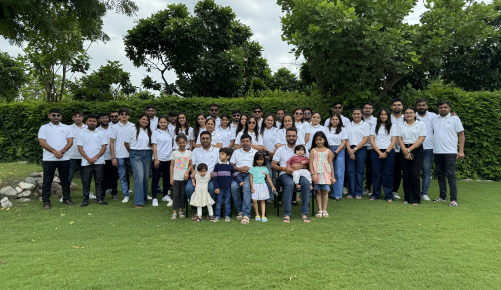
Our team brings together designers, developers, strategists, and marketing experts under one roof, making collaboration seamless and execution faster.
Learn MoreAuthor
 tec-sense
Recent Posts
- 05-08-2026
- CRM Development
Choosing a CRM Development Company? 20 Things to Check Before Signing a Contract
- 17-07-2026
- SaaS Development
Before You Build a SaaS Product: 10 Questions Every Founder Should Answer
- 07-07-2026
- Mobile App Development
Is Your Business Ready for a Mobile App? 15 Signs It’s Time to Invest
Industry Recognition
Clutch

Featured as a trusted service provider with verified client reviews and strong project outcomes.
2014
Upwork

A trusted development partner with a proven track record and long-term collaborations.
2015
Behance

Home to our best creative and UI/UX design work — curated and showcased globally.
2020
Dribbble

Showcasing our best UI/UX and creative design work - crafted for engaging digital experiences.
2023

Five-star rated for the way we treat our partners.
2014