


- (01)
SaaS App Development
We engineer scalable, multi-tenant architectures designed for rapid market expansion.
- (02)
Custom CRM Development
Future-ready CRM solutions designed around your workflows, teams, and customer experience.
- (03)
Website Development
We craft modern, responsive websites focused on performance, security, and user-friendly experiences.
- (04)
Mobile App Development
We craft high-fidelity iOS and Android experiences that drive retention and user engagement.
- (05)
E-commerce Website Development
We build conversion-optimized digital storefronts built to manage global scale.
- (06)
Creative Designing
We create data-informed UI/UX systems that elevate brand identity and user flow.
- (07)
Digital Marketing
We Execute high-ROI digital strategies that turn visibility into measurable revenue.














Our Work
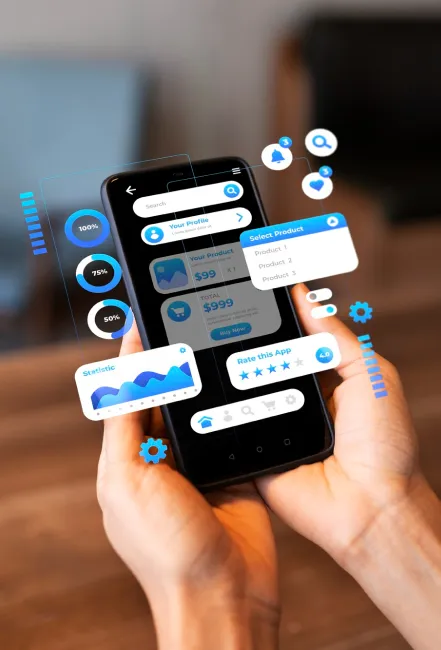
Our work reflects our expertise in delivering innovative, scalable, and user-focused digital solutions. From custom software to modern web and mobile applications, we help businesses transform ideas into impactful products that drive growth, enhance user experience, and create long-term value in competitive markets.
Careers
Empower your professional journey at Tec-Sense. We are a collective of thinkers, creators, and problem-solvers dedicated to pushing technical boundaries. If you’re passionate about innovation and eager to shape the future of software development, explore our open roles and build your legacy with us today.


From Idea to MVP in 30 Days: A SaaS Founder’s Playbook (With the Right Dev Partner)
Many SaaS founders do not fail because of a lack of ideas. They fail because they spend too much time building the wrong product.
It is a common challenge. A founder identifies a market opportunity, assembles a feature list and begins development. Months later, the product is still not ready, budgets have increased and valuable market feedback has yet to be collected.
In highly competitive markets across the UK, Australia, USA, Canada and Europe, speed matters. The sooner you validate your concept with real users, the sooner you can make informed decisions about future investment and growth.
This is why successful founders focus on building a Minimum Viable Product (MVP) rather than a fully featured platform from day one.
When approached correctly, it is entirely possible to create an MVP for SaaS startup ideas within 30 days. The key is having a clear strategy, disciplined scope management and the right development partner.
Why Speed Matters More Than Perfection
Many first-time founders believe their product needs every planned feature before launch.
The reality is different.
Customers rarely care how many features your platform offers if it does not solve their primary problem effectively.
An MVP allows founders to:
- Validate product-market fit faster
- Gather feedback from real users
- Reduce development risk
- Attract investors with a working product
- Avoid investing heavily in unwanted features
The goal is not to build a simplified version of your final product. The goal is to launch the smallest version capable of delivering value and generating meaningful feedback.
The faster you reach that stage, the faster you can improve the product based on actual customer behaviour rather than assumptions.
What a 30-Day MVP Really Looks Like
One of the biggest misconceptions around MVP development is that it requires cutting corners.
A successful MVP should still be:
- Stable
- Secure
- User-friendly
- Scalable enough for early growth
What changes is the scope.
Instead of building ten features, you focus on the one or two capabilities that solve the core business problem.
For example:
Rather than building a complete project management platform, an MVP might focus exclusively on task creation and team collaboration.
Rather than launching a comprehensive marketplace, an MVP may initially focus on connecting buyers and sellers through a single transaction workflow.
The objective is clarity, not complexity.
The SaaS Founder’s 30-Day MVP Framework
Week 1: Define the Core Problem
Many projects slow down before development even begins because the product vision lacks focus.
Start by answering three questions:
- What problem are we solving?
- Who are we solving it for?
- What is the minimum functionality required to solve it?
At this stage, founders should prioritise outcomes rather than features.
A strong development partner can help challenge assumptions and identify opportunities to simplify the product without reducing its value.
Week 2: Prioritise Features and User Journeys
Not every feature belongs in the first release.
One effective exercise is categorising requirements into:
- Essential
- Important
- Future enhancements
Many founders discover that more than half of their original feature list can be postponed without affecting product validation.
Focus on the user journey that delivers immediate value.
If users cannot complete the primary action within the application, additional features become irrelevant.
Week 3: Design and Development
With a clearly defined scope, development can move quickly.
This stage typically includes:
- UI/UX design
- Database architecture
- Frontend development
- Backend development
- API integrations
- User authentication
The advantage of working with an experienced SaaS development team is that proven frameworks, processes and reusable components can significantly reduce development time.
Rather than solving every challenge from scratch, experienced teams focus on accelerating delivery while maintaining quality.
Week 4: Testing and Launch Preparation
The final week focuses on ensuring the product is ready for real users.
This includes:
- Functional testing
- User experience testing
- Security reviews
- Performance optimisation
- Bug fixing
The objective is not perfection.
The objective is confidence.
By the end of this phase, founders should have a working product ready for customer feedback and early adoption.
Building In-House vs Working With a Development Partner
One of the most important decisions founders face is choosing how to build their MVP.
The following comparison highlights the differences.
| Factor | In-House Team | Experienced Development Partner |
| Recruitment Time | Several weeks or months | Immediate access to specialists |
| Upfront Investment | High | More predictable |
| Time to Market | Slower | Faster |
| Technical Expertise | Depends on hires | Established SaaS experience |
| Scalability | Limited initially | Flexible resource allocation |
| Project Management | Internal responsibility | Shared responsibility |
For many startups, speed and access to expertise make external development partnerships a practical choice during the MVP stage.
Common Mistakes That Delay MVP Launches
Even promising products can lose momentum when founders make avoidable mistakes.
Trying to Build Everything at Once
Adding features continuously is one of the fastest ways to miss launch deadlines.
Successful founders focus on solving one problem exceptionally well before expanding functionality.
Delaying User Feedback
The longer a product remains in development, the longer critical customer insights are delayed.
Early feedback often identifies opportunities and risks that cannot be predicted internally.
Prioritising Technology Over Business Goals
Technology supports business outcomes. It should not drive them.
Every development decision should align with user needs, market validation and growth objectives.
Choosing the Wrong Development Partner
A development team should contribute more than technical delivery.
The right partner helps:
- Refine product scope
- Identify risks
- Improve development efficiency
- Accelerate time to market
Founders benefit most when development teams understand both technology and business objectives.
What Founders Should Look for in an MVP Development Partner
Not all development partners approach MVP projects the same way.
When evaluating potential partners, consider the following:
SaaS Experience
Look for teams that understand subscription platforms, user onboarding, scalability and growth challenges.
Strategic Thinking
The best partners challenge unnecessary complexity and help maintain focus on business outcomes.
Transparent Communication
Clear communication reduces delays and keeps stakeholders aligned throughout the project.
Flexible Development Models
As priorities change, your development partner should be able to adapt resources and timelines accordingly.
Long-Term Support
An MVP is only the beginning.
Choose a partner capable of supporting future development, scaling and feature expansion.
Why the Right Development Partner Changes Everything
Founders often focus on development costs when planning an MVP.
A more important consideration is time.
Every month spent building features that users may never need creates opportunity costs.
The right development partner helps founders move faster, validate sooner and make smarter product decisions.
Instead of investing months in assumptions, businesses gain the ability to learn directly from their market.
That learning often becomes the foundation for future growth.
Conclusion
The fastest-growing SaaS products are not always built by the largest teams. They are often built by founders who focus on solving a real problem, validating quickly and adapting based on user feedback.
If your goal is to create an MVP for SaaS startup success, the priority should be speed, clarity and execution.
A focused 30-day MVP allows founders to reduce risk, validate ideas and build momentum without overcommitting resources.
With the right development partner, launching a SaaS MVP becomes less about building every possible feature and more about delivering value to real users as quickly as possible.
If you are planning a SaaS product and want to move from concept to launch efficiently, choosing the right technology partner can make all the difference.

About Tec-sense
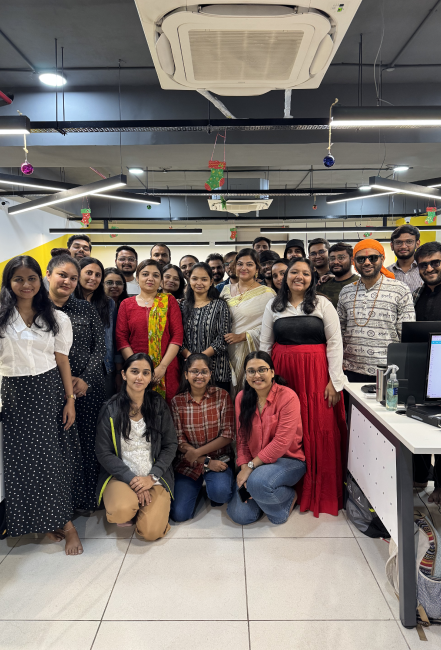
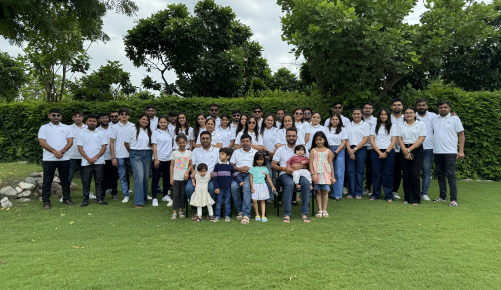
Our team brings together designers, developers, strategists, and marketing experts under one roof, making collaboration seamless and execution faster.
Learn MoreAuthor
 tec-sense
Recent Posts
- 11-08-2026
- CRM Development
How Much Does Custom CRM Development Cost in 2026? A Complete Pricing Guide
- 05-08-2026
- CRM Development
Choosing a CRM Development Company? 20 Things to Check Before Signing a Contract
- 17-07-2026
- SaaS Development
Before You Build a SaaS Product: 10 Questions Every Founder Should Answer
Industry Recognition
Clutch

Featured as a trusted service provider with verified client reviews and strong project outcomes.
2014
Upwork

A trusted development partner with a proven track record and long-term collaborations.
2015
Behance

Home to our best creative and UI/UX design work — curated and showcased globally.
2020
Dribbble

Showcasing our best UI/UX and creative design work - crafted for engaging digital experiences.
2023

Five-star rated for the way we treat our partners.
2014